Sailing: A Business Case Study

Philippe Delamare posted this last week and I have been meaning to put it up as a superb case study. For sailing. For business. For life.

“Let me explain: we all start with a strategy, a roadmap, a certain level of aggression versus a degree of caution, ambition, a vision of what we came for. It’s really great to have tons of messages of support, words of encouragement, signs of friendship. But they are often also opinions, advice, especially caution and safety. Paradoxically, all of this can become anxiety-inducing – discreetly – which is very bad of course, and can influence you or make you lose sight of the direction of your initial energy.”

Link here Straight Line

Optimum Route on GSC

Displacement boats, like Frank, rely on the length of hull in the water to counterbalance the wind in the sails & generate movement through the sea. Planing boats use forwards momentum through the water to lift the hull dynamically out of the water, reducing resistance and increasing speed with a direct transfer of wind power from the sails to the boat’s direction.

So a displacement boat has a speed limiter. Its length of hull in the water determines the max amount of wind power that it can convert into movement.

Great job by Philippe Delamare: he “has sailed only 800 Nautical miles in excess of the theoretical route with a “wastage” of just 3.2%”

https://globalsolochallenge.com/100-days-everest/

Mowgli.
Philippe Delamare ahead of the GSC pack.

Fettlin’ Day! October 29, 2023

Colin aboard Frank.

Frank used to have a 12volt fridge, which also ran off mains when alongside.

I mentioned (https://wordpress.com/post/frank-justfrank.com/306 October 2015) the fridge, which I extracted from its hole by the engine : “Most useless kit: the refrigerator. I donated this to a charity in Dartmouth. Every time I had a problem with the electrics or engine I had to haul it out of its home.”

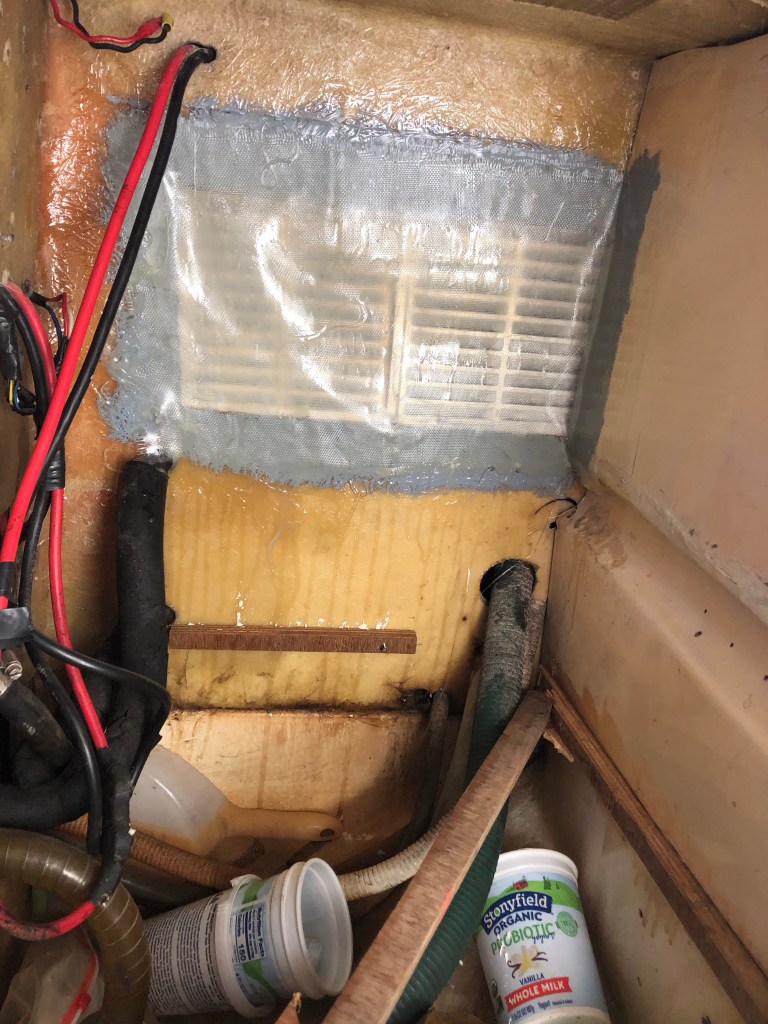
So ever since I have had this hole, having converted the icebox to be a fridge:

The gaping hole where the fridge lived.

I am going to finally turn it into a storage cupboard. I’ll leave access to the engine water inlet. There is a separate access door under this pic.

Stbd port

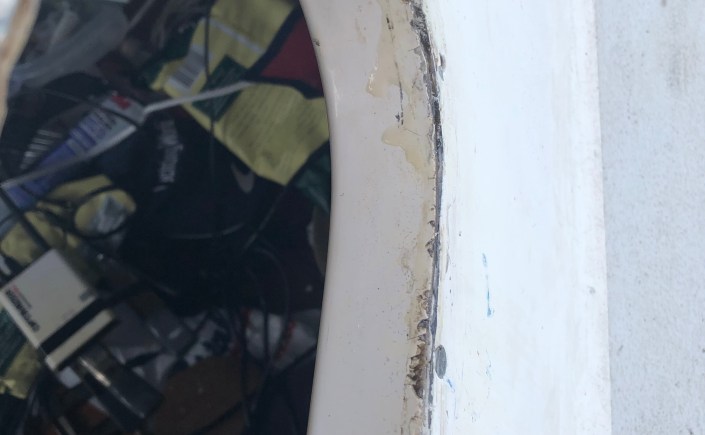
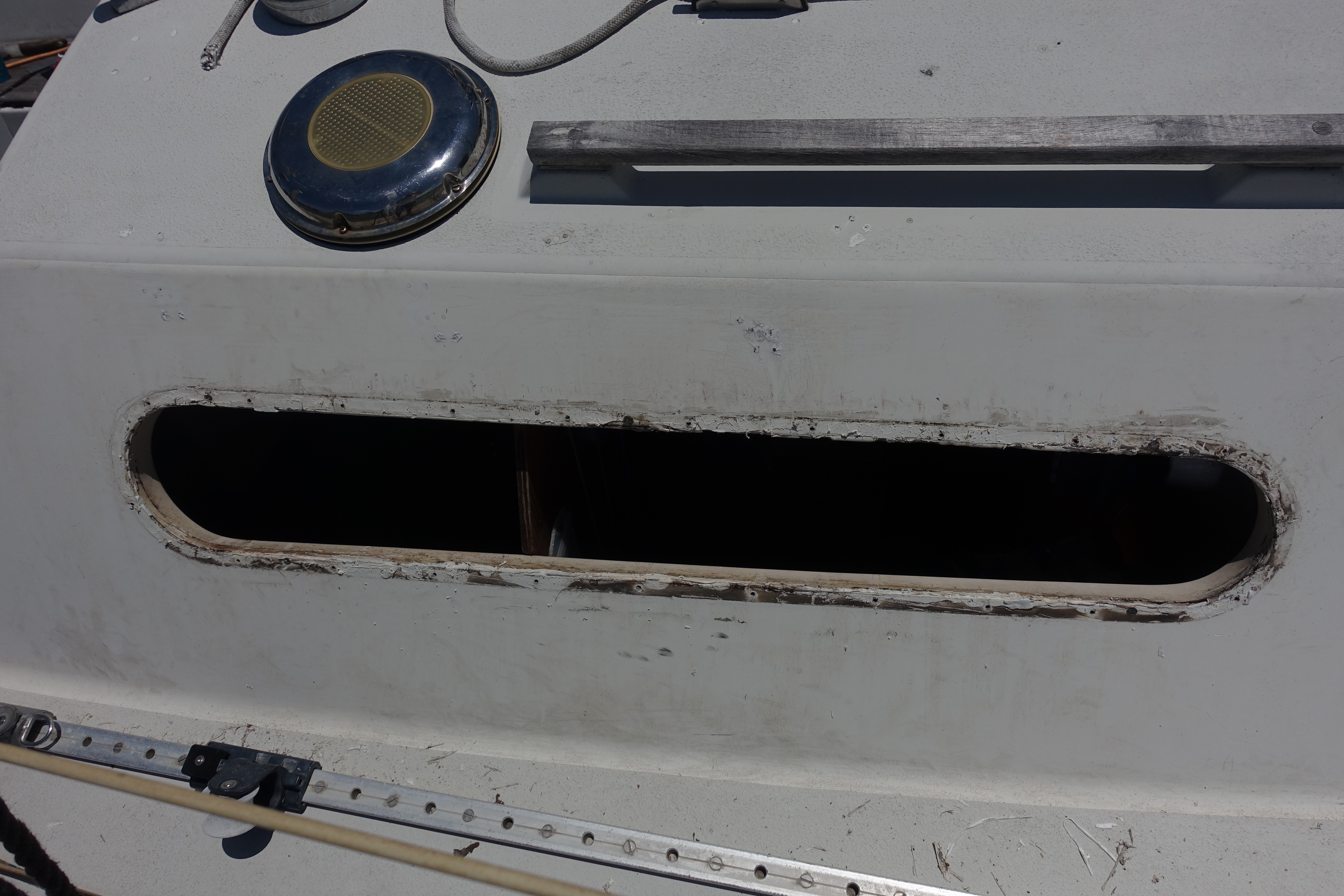
Last August I repaired the port side forward port (the big one), rebedding the glass in marine silicon in the alloy frame and repairing the porthole in which it sits. That port was leaking water on the galley side. It seems to be dry now, so this last weekend I did the other side, which leaks water into the chart station, ruining anything not waterproof in the desk and so on.

Gaps filled and epoxied..

2019-07-28 at 09-35-11

Gaps in port frame before thee repair.

2019-07-27 at 16-14-01

The port before repair

2019-07-27 at 13-15-082019-07-27 at 13-14-56

For some silly reason I can’t find or did not take pics of the frame, nor of the finished job, but I will add them later. Neither repaired job is perfect – I need to clean up the silicon from the glass, but it will keep the water out. Four more to go, two each side (smaller).

SailTimer Wireless Wind Instrument

My new SailTimer wind instrument finally arrived today.

It is a Bluetooth wireless device, to replace the NASA Marine Clipper unit, which has a cable from masthead to cockpit, where the display unit site. The Clipper stopped working months ago, with the masthead unit having given up the ghost and, I suspect, the wire having some breaks in it.

This Sailtimer unit should transmit to my iPhone(s), iPad, etc as well as give me access to Crowdsourced wind wherever there are users – both historical and in realtime.

The Unit:


How it is supposed to look, once installed:


I will use my Aloft Alone kit to shimmy up the mast and install it – perhaps next weekend.